About pictures/当ブログ内の写真について/당 블로그내의 사진에 대해서

Most of the pictures in this blog are taken by my camera, yet some of them were downloaded from the website of the hiking club. If you click any pictures, they become the original size.

当ブログ内の写真の大部分は筆者のカメラで撮影したものですが、一部、山岳会の共有写真からダウンロードしたものを含みます。すべて、各写真をクリックすれば、元のサイズに拡大します。

당 블로그내 사진의 대부분은 필자의 카메라로 촬영한 것입니다만 일부 산악회 공유 사진으로부터 다운한 것도 포함합니다. 모두 각 사진을 클릭하면, 원래 사이즈에 확대합니다.

2010年4月12日月曜日

100410 YongChuiSan (霊鷲山영취산439m), Yeosu(麗水)、JeonNam(全南)

April 10, 2010 (Sat) Cloudy.

AhToSan 262nd hike (It was my 196th hike with AhToSan): YongChuiSan (439m), Yeosu, JeonNam province. “YongChui” means “sprit of eagle.” This name is popular in Korea. There are at least 5 “YongChuiSan” in Korea and this mountain is the lowest among them. Yet because of “jindalle community,” it is a very famous mountain for hikers.

Actually, all seats (45) were reserved and there was no vacancy in the bus. B (Mexican friend) and I took back seats of the bus and we started at 6 a.m. at the Expo South Gate Parking Lot.


This is my 3rd time to climb this mountain. Last time we climbed from the other side of the mountain (industrial area). This time we climbed from SanAm Elementary School side.

We passed through a peaceful village where I noticed a cow plowing the rice field. There are many cherry trees and their blossoms were in full bloom.


[A cow plowing in the field, 牛が田を耕していた。소가 논을 갈고 있었다.]

After about one hour hike, we reached at “jindalle” festival area from where you could see jindalle community very well.


[Looking down the jindalle festival area,チンダルレ祭り会場を見下ろす、진달래 축제 회장을 내려다본다]

First we climbed JinRyeSan (510m) which is the highest peak of this hike. Then we came back to the festival area.

We (6 of us) walked toward Siru Bong and took a good place for lunch on the flat area. While having lunch, a helicopter was hovering around the up of our heads. Someone in the chop was waving his hands toward us, and many hikers were waving back their hands.
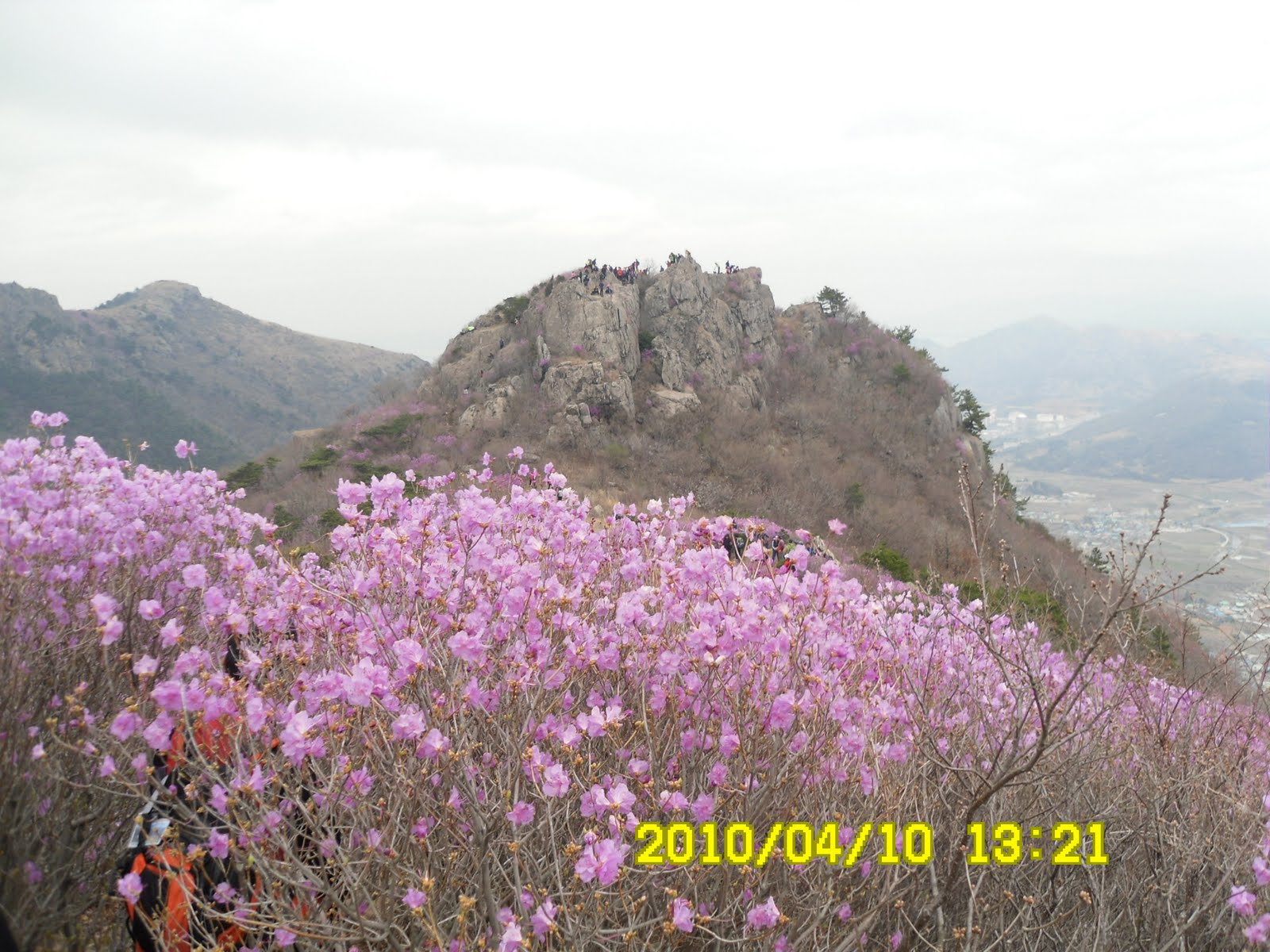

[The whole mountain covered with chindalle, 山を覆うチンダルレの群落、산을 덮는 진달래 군락]

After lunch we walked in the middle of jindalle community, and walked toward YongChuiSan via Siru Bong. Siru is a traditional kitchen utensil for cooking rice when they make rice-cake. So the mountain looks like “Siru.”

There is a wooden mark for the peak of YongChuiSan for the use of emergency call. It was relatively easy hike to go down over a small hill from there along the small river.

[Wooden mark as the peak of YongChuiSan、霊鷲山山頂の木標、영취산 정상 나무표]

We reached at a beautiful temple named “HeungGukSa” which was built during Goryeo dynasty (918-1392).


["Dragon head" attached to the roof of a temple building,寺の屋根に付いていた龍の彫り物、흘국사 건물의 지붕에 붙고 있었던 용 머리]

There were many cherry trees and they were all in full bloom.

People here in Korea, just enjoy seeing the blossoms, just like they enjoy seeing other beautiful flowers, and not put sheet under the blossoms and enjoy eating and drinking like Japanese people.

There were many automobiles especially buses. Too many for the parking lot. So they parked along the street. Our bus was one of them.

Local people held "open-air" market along the street, and were selling vegetables. One thing I found interesting was “dandelions.” A lady was selling dandelions, saying “it’s a good medicine for liver.”


[A lady selling dandelions, タンポポを売る婦人、민들레를 파는 아주머니]

Later, I found what she said was true in Wikipedia as below:
タンポポ:http://ja.wikipedia.org/wiki/%E3%82%BF%E3%83%B3%E3%83%9D%E3%83%9D
Dandelions:http://en.wikipedia.org/wiki/Taraxacum#Medicinal_uses
민들레: http://ko.wikipedia.org/wiki/%EB%AF%BC%EB%93%A4%EB%A0%88%EC%86%8D

We had “Tippuri” party beside the bus as usual. The main dish was called “Suyuk” which is boiled pork with vegetable.


[Main dish was "suyuk" or boiled pork, メインディッシュはスユク(茹でた豚肉)、메인 디쉬는 수육]

I enjoyed the tippuri as usual, but the trouble came after the party. When we all aboard on the bus, a man sitting behind of us, began accusing me of “Dokdo” and “Historical issues” which I hate to discuss with Korean people.

I do not like to discuss the political issues with AhToSan members, or any Korean people, and that’s what I told him. He kept noisy accusation several times, then even told me “we will appeal that Daemado is ours.” Daemado means Tushima in Korean language. I told him, “Go ahead, and say your appeal to all of the world.”

On the way back we stopped at Fish Market of Yeosu. Fish market is always fun to see. B and I enjoyed seeing a lot of different kind of fish. Most intriguing sea animal was “sea hare.” I never thought of “sea hare” as “food.”


[Sea hares for sale, 売り物の「アメフラシ」상품인 「군소」]

Sea hares: http://en.wikipedia.org/wiki/Aplysiomorpha
アメフラシ:http://ja.wikipedia.org/wiki/%E3%82%A2%E3%83%A1%E3%83%95%E3%83%A9%E3%82%B7


[They are drying fish, 魚の干物作成中、물고기의 마른 포 작성중]

The bus was supposed to leave the market at 4:50. But two people did not return to the bus even after 5 p.m. It was the man who attached me orally and the one who stopped him on the bus. They were drinking more alcohol at the market.

The bus left the market at 5:05 and arrived at Expo South Gate Bus Stop at 9 p.m.

2010年4月10日(土)

アトサン定期登山262回(私は196回目)の登山は全南・麗水(ヨス)の霊鷲山(ヨンチュィサン영취산:439m)でチンダルレの名山として知られている。「霊鷲山」という名の山は全国に少なくとも5つあり、その中でも最も低い山だが、チンダルレと言えば、麗水の霊鷲山である。今回は参加者が45人でバスは満員。私はメキシコ人の友人Bとともに後部座席に座り、エキスポ南門を6時に出発した。

私はこの山は3回目で、前回は2年前の2008年4月5日に登山している。前回は、今回とは山の反対側になる「予備軍訓練場(예비군훈련장)」から登ったが、今回はサンアム小学校(산암초교)側から登った。


[Industrial area on the other side,山の反対側は工業地帯、산의 반대측은 공업지대]

近頃めずらしく耕運機ではなく牛が田んぼを耕しているジンプクマウル(진북마을)を過ぎて林道を横切って登りきった広場がチンルダレ祭り会場。


[A helicopter was flying, 麗水市のヘリコプター여수시(麗水市)의 헬리콥터]

そこから左手にそびえるジンレ山(진례산510m)に登って展望を楽しんだ後、祭り会場へ戻り、シル峰方面へ少し登ったひらけた場所で、6人の小グループで昼食をとった。この時、麗水市と書かれたヘリコプター1機が近くを旋回し、乗務員が我々に手を振った。


[The whole mountain covered with chindalle, 山を覆うチンダルレの群落、산을 덮는 진달래 군락]

昼食後、チンダルレの群落の中を歩いて蒸籠(せいろう)のような形をしたシル峰(「シル」とは韓国語で「蒸篭」)を経て霊鷲山山頂に至った。霊鷲山山頂の石標はなく、真新しい緊急呼び出しのための木標に「霊鷲山山頂」と書かれていた。


[Wooden mark as the peak of YongChuiSan、霊鷲山山頂の木標、영취산 정상 나무표]

ここからは小高い丘ひとつを越えて渓谷沿いに下ると以前も訪れた「興国寺」を通って駐車場へ出る。この寺は高麗時代(918~1392)に建てられた古刹で、国宝・宝物が多いというが、境内に植えられた桜が満開でとても美しかった。


[Mountain Gate of Heongkuksa Temple,興国寺(フングクサ)の山門、흥국사 정문]

また人工の洞窟のような施設があり、龍の口から飲料水が出ているが、この内部の仏教画が見事だった。興国寺の駐車場は車があまりに多かったせいか、たくさんの車が路上駐車しており、我々のバスもそのなかの1台だった。

道端では高菜のような野菜とそれをキムチとして漬けた食べ物などが売られていた。これは特産物らしく、多くの会員が買っていた。野草も多く売っていて、私はぜんまいと芹を買った。

さて、ティップリは、路上駐車したバスと小川の間のせまい空間に椅子を並べて進行中だった。メインディッシュは、ゆでた豚肉を野菜に包んで食べる「スユク(수육)」で、おいしかった。


[Main dish was "suyuk" or boiled pork, メインディッシュはスユク(茹でた豚肉)、메인 디쉬는 수육]

しかし、初めて来た新人の一人、Cが焼酎を飲み過ぎたせいか、車内で私に「独島」だの「歴史認識」だのと言い出して絡んできたのには参った。

はじめは「政治的な話はしたくない」と取り合わなかったが、「それなら対馬は韓国領だと主張するぞ」というので、「どうぞご自由に、世界中にそう主張なさってください」と答えた。この酔っ払いの隣に座ったAさんがなだめて、この場はおさまった。

バスは麗水市内を抜ける前に海産物市場に止まり、30分ほどショッピングの時間を持った。海産物市場を見物するのはおもしろい。なかでもアメフラシを売っていたのには驚いた。これも湯がいて食べれるらしい。私は中型の鯛の干し物を買った。1万ウォンで11匹もきた。


[The entrance of the "new sightseeing type" fish market, 観光型新海産市場、관광형 새 해산물시장]

バスは4時50分に出発する予定だったが、5時を過ぎても戻らない会員がいる。私にからんできたCとそれをなだめたAさんが市場でも酒を飲み始めたらしく、彼らが戻ってこなかった。Cの奥さんらしい人が携帯で早く戻るよう叱って、バスは15分遅れで出発した。

バスは夕方のラッシュ時の渋滞に巻き込まれ、高速に乗るのに時間がかかり、結局大田のエキスポ南門に到着したのは午後9時だった。

DR#180 “Movies in Korea” 「韓国映画事情」

DR#180 “Movies in Korea”

Next to hiking, what I enjoy in Korea is seeing movies in the theater. Recently I enjoy “foreign” movies since last December. I really enjoyed “Avatar” very much. I saw this movie 3 times in three weeks.

In Korea, the fee of the first movie in every screen is half of regular fee. Since I have no class on Friday, I usually go to see the movies on Friday.

The multiplex movie theater is in the building named “Star-gate” which is about 30 minutes by bicycle from my apartment.

The multiplex theater was called “Premus” and the first movie of every screen cost only 4000 won. Moreover, if I showed my LG card, they discount 1000 won off, which means I could see the first run movie with only 3000 won(about 280 yen!)

But “Premus” seemed to be bought off by “CGV” last year, and they raised the “morning” movie fee to 5000 won. And they did not discount with LG card anymore.

Comparing with movies in Japan, it is still reasonable cost (5000 won means 450 yen) so I often go to the theater.

This year, they run “3D” movies like “Avatar” one after another. I saw “Alice in the wonder land” and “Clash of the Titan.” They are all fantasy fictions. (3D movie costs 8000 won, however.)

Today, I saw “Green Zone” which looked like real documentary movie based on “2003 invasion of Iraq.” According to Japanese Wikipedia, this is a “thriller” movie.
http://ja.wikipedia.org/wiki/%E3%82%B0%E3%83%AA%E3%83%BC%E3%83%B3%E3%83%BB%E3%82%BE%E3%83%BC%E3%83%B3

But English version did not say “thriller” movie at all, and I don’t think this is a “thriller” movie, rather it is a documentary movie.
http://en.wikipedia.org/wiki/Green_Zone_(film)

It will be released in Japan on May 14, 2010.

DR#180「韓国映画事情」

韓国の生活で登山の次にうれしいのは映画だ。なにせ安くて早い。最近は外国映画を続けて観ている。昨年12月に封切された「アバター」は特に気に入って3回も観た。

韓国では午前中に上映される1回目の映画の料金は半額だ。私がいつも観に行くのは、家から自転車で30分ほど離れた斗山にあるスターゲイトビル内のマルチプレックスだ。

昨年まで、プリマスという映画館のチェーンが経営していて、早朝割引は4000ウォン。それにLGカードを示すとさらに1000ウォン割引されて3000ウォンで封切映画が観られた。

しかし、昨年、経営者がプリマスからCGVに変わり、早朝割引料金が5000ウォンになった。さらに痛いことにLGカードが使えなくなった。

それでも5000ウォンといえば日本円で450円程度なので安い。

ただし「アバター」は3D映画なので8000ウォンだ。「アバター」のあと、「不思議の国のアリス」とギリシャ神話を素材にした「タイタンの戦い」と立て続けに3D映画を観た。ただ、「アバター」の時のような衝撃はなかった。

今日はイラク戦争を素材にした「グリーン・ゾーン」を観た。3本続けてファンタジー映画を観た後の本格的なハードボイルドというかドキュメンタリー映画のような、米国の陰謀を暴いた映画に衝撃を受けた。

この映画のすごいところは、現実のイラクでは大量破壊兵器がなかったにも関わらず、戦争がはじまり、そして続いていることだ。

ちなみに「グリーン・ゾーン」はネットで予告編が観られるが、日本での公開は5月14日である。

予告編 http://green-zone.jp/

2010年4月5日月曜日

100403 GamAmSan (甘闇山:828m), Hapchon(陜川), GyongNam(慶南)

April 3, 2010(Sat) AhToSan No. 261st Hike to GamAmSan (828m) in Hapchon, GyongNam Province. (My 195th hike with AhToSan, and 16th hike in 2010.)

It was a super fine day. The chartered bus left Expo-South Gate at 7 a.m. and arrived at Daegi village at 10 a.m.


[About 40 people joined the hike, 約40人が参加した。 약 40명이 참가했다.]

Among 40 perticipants, there were only 2 foreigners, B (Mexican) and I. B bought a new camera, so he was eager to hike.


[At the first rocky slop, 最初の岩場、최초의 암석 지대]

GamAmSan locates just next to HwangMeSan National Park. It was really a rocky mountains, but there were not many hikers that day. One reason is it is not as famous as HwangMeSan. Yet it was challenging, and fun to climb rocks upon rocks.


[Members on the rock, 岩の上に立つ会員たち、바위 위에 서는 회원들]

The whole group became 3 small groups according to hiking pace. Top group, 2nd group, and 3rd group. B walked with Top group, but I walked with the 2nd group.


[The Hawk Rock, メパウィ(鷹岩) 매바위]

We did not see each other until the end of the hike. 5 and half hours later.
Top group made the peak of GamAmSan by noon, but the rest of us couldn’t. We had lunch on the big rock before GamAmSan.


[Lunch on the big rock、岩の上で昼食、바위 위에서 점심]

Afternoon hike was also challenging, but ridge hike was relatively easy because it was well facilitated with wires, ropes, and even steel steps.


[The steel steps, 鉄の階段、철계단]

The final peak was called BuAmSan (695m) then we descended to the village called “Igyo Maul.”


[The final peak, BuAmSan, 最後の峰・傅岩山、마지막 봉우리인 부암산]

The time difference of each group was about 30 minutes, each.

As for the tippuri party, they served spicy soup with big bones of pig. It was very spicy yet delicious. Both B and I enjoyed it with the rest of AhToSan hikers.


[After-the-hike party, ティップリは豚の骨汁、뒷풀이는 감자탕]

2010年4月3日(土)アトサン定期登山261回(私は195回目)の登山は慶南・陜川の甘闇山(カムアムサン감암산:828m)で久しぶりに快晴。また、大田からも近いため、南門7時に出発。明るくなってからの出発は、明るいうちの帰着とともの今年初めてのことだ。

今回の外国人の参加者はメキシコ人のBと私だけ。Bは先週、富士のデジカメを購入して張り切っている。


[B was eager to take pictures with his new camera,Bは新しいデジカメで熱心に写真撮影、B은 새로운 디카로 열심히 사진촬영]

バスはテギ・マウルへ10時に到着。甘闇山をバックに記念撮影をしてから登山開始。渓流に沿って登ってから木製の橋を渡るとすぐ岩場。ここで40人近いグループは、先頭、中間、後尾の3グループに分かれた。Bは先頭グループ、私は中間。

最初の目標はメパウィ(매바위)で、鷹岩という意味だが、その姿に由来するのだろう。メパウィはかなりの難所で、特に登ってから、下るのが難しかった。


メパウィを過ぎても岩場が続き、今回は特に天気もとびきり良かったため、写真撮影に時間がかかった。中間組は、2時間ほど登った展望のよい場所で昼食。

先頭組はすでに甘闇山頂上に到達していた。また後尾は約30分遅れて中間に追いついた。昼食は少なくとも3カ所でラーメンを煮て、弁当と共に食べた。


[The top of GamAmSan, 甘闇山(カムアムサン山頂、감암산 정상]

昼食後、中間組がまず、出発。30分ほどで、甘闇山頂上に到着した。ここから次の目的地の傅岩山(プアムサン부암산:695m)までも岩場が多く、場所によってはワイヤーやロープ、また鉄製の階段などが設置されている。


[Steel steps, 鉄製の階段、철계단]

山自体の奇岩も素晴らしかったが、天気が良かったため、周囲の山々もよく見えてすばらしかった。特に目立った山は伽耶山だった。


[Jindalle flowers at the skirt of the mountain, 麓に咲いていたチンダルレの花、기슭에 피어 있었던 진달래 꽃]

花はサンスユやセンガンナムの黄色の花のほか、麓ではチンダルレや梅の花がきれいだった。特に村の近くの梅林は白い梅の花が満開だった。


[Ume blossoms were in full bloom,梅の花は満開、매화꽃은 만발]

約5時間から5時間半のハイキングの最終ゴールはイキョマウル(이교마을)という村の駐車場で、山岳会のバスはアトサンのみ。

ティップリは大きな豚の骨の入ったカムジャタンのようなスープで、これは辛いものに目がないBがいたく気に入って、お代わりを連発、私も彼に負けずにお代わりをした。

2010年3月30日火曜日

DR #179 “Kkosaem-Chuwi” vs. “Hanabie” 「コッセムチュイ(花を妬む寒さ)」と「花冷え」

DR #179 “Kkosaem-Chuwi” vs. “Hanabie”

In Korea, people call the sudden cold weather at the time when flowers bloom, “Kkosaem-Chuwi.”

“KKosaem” means to be jealous of flowers and “Chuwi” means coldness, or cold weather. So it means “Cold weather which is jealous of flowers.”

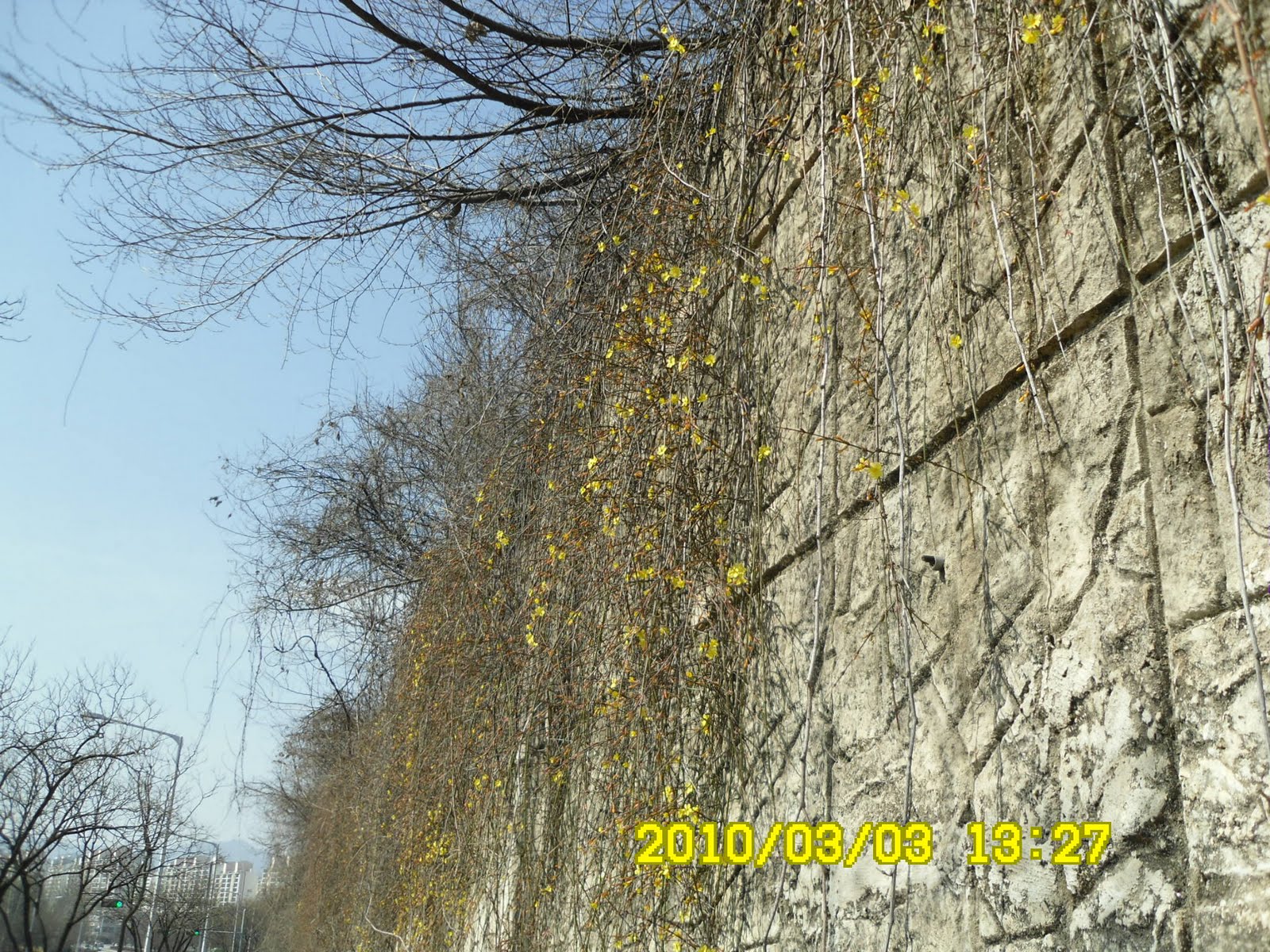
I saw yellow flowers began blooming on March 3, for the first time this year.


[The first flowers this year, この春最初の花、올해봄 처음으로 본 꽃]

The flowers are like “rengyo” in Japanese, or forsythia in English(a bush that has small bright yellow flowers in the early spring).

Just one week later (3/10), it snowed much so that the snow remained for a couple of days in Daejeon.


[Then it snowed a week later, 一週間後に雪が降った、일주일후에 눈이 내렸다]

That day, I went to ETRI to attend the Bible Class, so I carried my camera, and took several beautiful pictures with snow.


[Inside of ETRI、ETRI内の雪景色、ETRI내의 설경]

The next day (3/11) when I went to the college where I work, I also brought my camera and took pictures with the flowers and snow.

I thought it was the last snow this year, but alas, just one week later(3/17), it snowed again!


[The view from the college window, 大学の窓から見た大徳テクノバリーの雪景色 대학 창문으로부터 본 대덕 테크노 밸리의 설경]

I went to Mt. Gyeryong on March 19, the 3 days later, and I found the trail all covered with snow! (I wrote about his story on my hiking blog before.)

Now it will soon be in April. Every year about this season, I remember “Ohanami” party I enjoyed with KEC (Kamakura English Club).

Before coming to Korea, I kept attending this “Ohanami” party early April every year (maybe 30 times from 1974 to 2003.) We used to go to Genjiyama Park in Kamakura where you can enjoy viewing a lot of cherry blossoms at this time.

Sometime, we felt very cold even we could see cherry blossoms. We call such cold weather as “Hanabie” or “Flower-coldness.”

According to the Korean web dictionary, “KKosaem-Chuwi꽃샘추위” is “Hanabie 花冷え” in Japanese, and “the last cold snap” in English.

I like Korean expression because it impersonate the weather. Japanese expression simply explains the situation, and English expression sounds like it happens only once.

I feel nostalgic for “Ohanami” party with KEC members.

DR#179 「コッセムチュイ(꽃샘추위)」と「花冷え」

韓国では、早春、花が咲く頃の寒さを「コッセムチュイ(꽃샘추위)」」と呼ぶ。直訳すると「花を妬む寒さ」だ。

今年、私の住むテジョンで最初の花が咲いたのをみたのは3月3日だった。


[The first flowers this year, この春最初の花、올해봄 처음으로 본 꽃]

この花は、私が勤める大学へ行く道の片側の土手に上から垂れ下がっている枝に咲く黄色い花で、レンギョウに似ている。いわば『しだれレンギョウ』とでも言おうか。

ところが、この花が咲いてから1週間後、1日では融けないほどの雪が降った。


[Then it snowed a week later, 一週間後に雪が降った、일주일후에 눈이 내렸다]

この日はETRIで開催される聖書研究に参加する日だったので、カメラを持って出かけた。思いがけない冬景色をカメラに収めることができた。


[Inside of ETRI、ETRI内の雪景色、ETRI내의 설경]

その翌日は、学校へ出勤する日で、この『しだれレンギョウ』の上に積もった雪と、花のコントラストを写真に収めた。

もう雪は降るまいと思っていたら、さらに1週間後(3/17)、またしても雪が降った。


[Snow covered statue of the college-founder, 大学創始者の像にも雪、대학창시자의 동상에도 눈]

この週の金曜日、一人で鶏龍山へ登ったら、アイゼンが必要なほど雪が残っていておどろいた。

もうすでに3月も末で、あと二日すれば4月である。

私は日本で住んでいた時、毎年、この時期、英語会のお花見に参加した。その回数はおそらく30回。いつも鎌倉の源氏山公園へ行った。

年によっては雨が降って、会員の家の中でのお花見になった記憶もある。

日本では花見のころの寒さを「花冷え」という。

韓国語の辞書を引くと「コッセムチュイ」は日本語では「花冷え」英語では「the last cold snap」とある(Daum総合ウェブ辞書)。

韓国語では寒さを擬人化した表現だが、日本語では状況を説明している語感がある。また、英語では突然襲われたような不意打ちされたような感じ、そして最後の一回きりという感じがする。

日本のお花見がなつかしいこのごろである。

2010年3月29日月曜日

100327 Black Stone Mountain, HaeNam, JeonNam 黒石山、海南、全南

March 27 (Sat) 2010. Cloudy. AhToSan’s 260th Hiking. Destination: HeukSeokSan(650m) in HaeNam, JeonNam Province. “HeukSeokSan” means “Black Stone Mountain.” It is said that when the rocks contain water (after rain), the color of rocks becomes black.

The hiking course: Bamjae – ByolMoeSan(Star Mountain: 465m) – GaHakSan (577m) – HeukSoekSan (Black Stone Mountain 650m) – Baramjae – EunGol (Silver Cave) – Parking Lot. Hiking distance was about 10 km, It took 5.5 hours.

Since we went southern tips of peninsula, we left 6 a.m., one hour earlier than usual, again. My good hiking pal, “B” from Mexico, brought his friend from San Diego, “M” this time. They talked each other in Spanish.

“Black Stone Mountain” locates in the south-west part of the peninsula, so it took nearly 4 hours from Daejeon by bus. On the way to the mountain, B was awarded as the 319th “Best Member of AhToSan.” (If you attend 10 times of AhToSan hiking, you are qualified to be “Best Member.”)

We arrived at Bamjae at 9:50 a.m., and after taking the group picture, we began climbing the mountain. The first part of the hike was hard, climbing steep slope and it seemed especially hard for M, since she ware not proper shoes for such hiking.


[The first part of the hiking, 登り始めの急坂、처음의 가파른 언덕길]

When we came to the ridge, she looked exhausted. She walked well along the ridge, however, and she even climbed rocky part well.

We could see pink flowers of “jindalle” and yellow flower of “sengangnamu” along the trail.

The 2nd peak of the mountain is called “GaHakSan” which means the shape of a crane with its wing spread. It looked like a big rocket to me, though. We had lunch before reaching GaHakSan.


["GaHakSan" カハク山 가학산]

One of side dishes which Korea members enjoyed was “Minari” or dropwort salad with “Cho-kochujang” “Kochujang” is explained as thick soypaste mixed with red pepper, and “Cho” means vinegar. It is simple and delicious side dish.

B usually eats sandwiches, but he brought cup-noodle rebelled “JJangpong” which is spicy noodle. As a Mexican, he likes spicy foods, so he generally enjoys Korean foods.

After lunch, we enjoyed ridge walking, climbing up and down, sometimes rather steep rocks, and reached at the peak of Black Stone Mountain (650m) at 2:50 p.m.

Then it was 2 km download to the final goal of the parking lot. Along the trail, I found a small entrance of the cave. The big sign says it is called “Eun-Gul” which means “Silver Cave.”


[The entrance of "Silver Cave" 「ウングル(銀窟)」の入口 은굴 입구]

During Japanese colonial period (1910-1945), about 80 people worked as minors to dig “silver” from this mountain.


[Explanation of Silver Cave, ウングルの説明、은골의 설명]

There was a small zoo near the parking lot. There were monkeys and peacocks in the cages there. We had spicy meals after the hike. B and M enjoyed having the meals with Korean hikers.


[There were Japanese monkeys in the zoo.ニホンザルの母子 일본 원숭이 모자 ]

This was my 15th hike of this year, and 195th hike with AhToSan since November 2004.

3月27日(土)、曇り。アトサンは260回目の企画で目的地は全南・海南の「黒石山(650m)」コースはパムジェ(밤재) – ピョルメ山(별뫼산星山:465m) – カハク山(가학산:577m) -黒石山(흑석산)キッテ峰(깃대봉)650m) – パラムジェ(바람재) - 銀窟(은굴)- 休養林駐車場で約10キロ、所要時間:5時間半。登録者は34名。

3月に入ってから毎週、春を訪ねて韓半島の南端へ行くため、大田出発が1時間早い6時。

今回は1ヶ月前にサンディエゴから英語教師として来たMが初めて参加。メキシコから来たBとスペイン語で会話をしていた。

今回の目的地の黒石山は半島の南西端の木浦の近所で、大田からはバスで4時間近くかかる。途中、バスの中ではBの「優秀会員」証の授与が行われた。Bはメキシコから昨年の夏、韓国へ来てからアトサンのハイキングによく参加し、定期登山だけでも10回を越えるようになった。


[A Mexican hiker got "Best Member" メキシコ青年B、ベストメンバーとなる。멕시코 청년 우수회원이 됬다.]

さて、出発地の国道2号線沿いの「パムジェ(밤재)」には9時50分に到着した。団体記念撮影をして「さあ、土曜日には山へ行こう!」と掛け声をかけてから登山開始。


["Let's go mountains!"「土曜日は山へ行こう!」아! 토요일은 산에 가자!] 

最初の山のピョルメ山までは正規の登山路ではない崖のような道を約500メートルほど直登。この登りでMは息が上がり、苦しそう。しかし、展望は良好。黒岩山は岩山で、鶏龍山や雪岳山を思わせる。


ピョルメ山からは尾根伝いになり、Mも快調に進んだ。登山路の両脇にはピンクのチンダルレやサンスユに似たセンガンナムの黄色い花が見えた。

鶴が飛び立とうとしている姿に見えるところから名づけられたと言うカハク山は、私には空にそびえたロケットのように見えたが、この手前で12時になり昼食をとった。


["GaHakSan" カハク山 가학산]

会員たちの食事のメニューで気がついたおかずにミナリ(미나리:芹)をチョ・コッチュジャン(酢とカラシ味噌を混ぜた調味料)で和えたものだ。これは簡単でおいしい。

メキシコ人のBはいつものサンドイッチのほか、初めてチャンポンのカップヌードルを持参した。これはとても辛そうだった。

食後はすばらしい岩山の景観を楽しみながら進み、また、場所によってはロープを伝って岩を登ったり降りたりし、黒石山最高峰のキッテ峰(깃대봉:650m)には午後3時近くに到達した。

キッテ峰からは約2kmのなだらかな下り坂で、麓へ行くほど、チンダルレの花があちこちに咲いていた。


[Jindalle flowers チンダルレの花 진달래 꽅]

また、パラムチェから400メートルほど下ったところにはウムグル(銀窟)と呼ばれる洞窟があり、説明によると日帝強占時代(1910年~1945年)に朝鮮人労働者が80人ほど、この穴の中で銀を発掘したとある。


[Explanation about Silver Cave, ウングルの説明、은골의 설명]

本日のゴール、休養林駐車場付近には小さな動物園があり、日本猿やクジャクやインコなどがいた。この猿の檻の説明には「カハク山の野生サル展示中」とあり、次のような説明があった。「数年間カハク山で生活して野生が強くなった『ヘナミ』は、高陽市のテーマ動物園で同じ種類の日本猿『チル』と愛の関係の中で訓練を受け、故郷へ錦を飾った。」大人の猿のそばには子猿がいたが、大人の猿が『ヘナミ』で、この子猿は『チル』との間の子どもなのだろうか。


[Explanation of "Japanese monkeys" カハク山野生猿展示中の看板 가학산 야생 원숭이 전시중의 간판]

また、後で知ったことだが、黒石山は野生の蘭が自生することでも有名らしい。そういえば、野生の蘭も数か所で見た。


[Wild orchid, 野生の蘭、야생 난꽃]

ティップリは豆腐とポークが豊富に入ったキムチチゲ。BもMも辛い料理は大好物で、料理を楽しんだ。

今年15回目、アトサン通算195回目のハイキング。