Place: Mt. ToHamSan, GyongJu, GyongNam
Event: Shisanje (To-begin-hiking Ceremony)
Course: Parking Lot – BulKukSa Temple – Iljumun (The gate of Seokguram) – ToHamSan (Shisanje) – the gate – temple – parking lot.
Partner: 44 AhToSan Members (Including 2 non-Koreans: Chris and George)
Chris came to Daejeon from Seoul on previous night (Friday.) Bernardo and I welcomed him at a Samgetang Restaurant next to Jjimjilbang called “Dongbangsak.”
 [At a Samgetang Restaurant, 参鶏湯(サムゲタン)レストランにて、삼계탕 식당에서]
 Jjimjilbang is a kind of “Super Sento” with a lot of different kind of saunas. It costs 6000 won to 7000 won (500 yen to 600 yen) and you can stay overnight.
It snowed a lot in Korean peninsula, esp. the side of “Sea of Japan” (Koreans call it Donghe, which means “East Sea”)
Chris and I happened to meet on the ferry boat from Shimonoseki to Busan last year. He is an invited English speaker to help Korean teachers of English at a junior highschool in Seoul. He has been in Korea only for 2 years, yet he is a fluent speak of Korean. Moreover, he can send e-mails in Hangul to both computers and cellphones. (I cann’t sent any mail to any cellphone at all.)
We left Expo South Gate at 7 a.m. as usual. We originally planned to start walking at ChuRyong, but the road to ChuRyong was closed because of heavy snow. So we changed the course, simplly shuttle between Bulkuksa and ToHanSan.
 [In front of the Bulkuksa Temple, 仏国寺前で、불국사 앞에서]
We arrived at the parking lot of Bulkuksa Temple at 10:45. We walked on the snow covered road from Bulkuksa to Ilchumun, the gate of entrance to Seokuram.
 [Near Bulkuksa Temple, 仏国寺付近の道路で、불국사 부근의 도로에서]
 [We walked on the snow-covered road to Ilchumun,仏国寺から一柱門までの雪道、불국사에서 일주문까지의 눈길]
We began trail walking from the gate. The snow became deeper and deeper as we approached to the top. I was glad to wear spatts this time so that I could avoid snow coming into my boots.
 [The gate for Seokram, 石窟庵入口の門、석굴암 입구의 문]
 [At a fork between Mt. ToHamSan and Seokram, 吐含山への登山路と石窟庵への分岐点、토함산에의 등산로와 석굴암에의 분기점]
This hiking on heavy snow reminded me of the hiking in Japan a week ago. The big difference is the number of the hikers. In Japan, we saw only a man during 9 hour hike at Mt. Sobo. Here, we had to walk after the rows of people. I did not count the number of people, but I guess it must be hundreds of people.
 [On the ridge near the peak, 山頂付近にて、정상 부근에서]
When I arrived at the top of the mountain, it was 1:25 p.m. Most of AhToSan mebers were already there, preparing the ceremony (Shisanjae.)
They hang Korean national flag and AhToSan flag at the altar. They also put offerings such as fruits, dry fish, rice cakes, etc. on the altar.
Then they gave salute to the flags and the altar. The chairman of the club read oath and wishes for safe hiking to the gods of mountains. After reading, he burned the paper on which such oath and wishes were written. Then he put money on the altar, and performed big bows. They follewed suit one by one.
 [They put money offering on the altar, 先ずお金を捧げる、우선 돈을 바친다.]
 [Then, perform "big bow" 次に「チョル(お辞儀)」をする、다음에 절을 하다]
 Chris performed big bows with a girl. The girl is a daughter of the vice chairperson of AhToSan. Since Chris was the youngest among men, and the girl was the youngest among female members, that’s why they performed “big bow” together.
After the ceremony we had “offerings” for our lunch. “Suyuk” or boilded pork was very delicious and popular among members.
After having lunch, we took a group picture, then we began decending from the mountain. We came back to the bus at 3:25 p.m.
 [A group picture at Mt. ToHamSan, 吐含山山頂で集合写真、토함산 정상에서 단체사진]
We had “Tippuri,” or after the hike party on the way back to Daejeon. Some members made snowmen while waiting for the meal.
 [The bus stopped for "Tippuri" party, 帰路に就く前にティップリ・パーティ、귀로에 오르기 전에 뒤풀이]
Chris and another man who came from Seoul, got off at Gyongju and went back to Seoul by KTX. We came back to Daejeon at around 8 p.m.
It was my 2nd hike with AhToSan this year and my 227th in total. Including those hikes in Japan, it was my 11th hike for this year.
登山月日:2011年2月12日(土) 晴れ
登山地:慶州 吐含山(トハムサン토함산)始山祭登山
登山コース:仏国寺駐車場→仏国寺→一柱門(石窟庵)→仏国寺→仏国寺駐車場(約8km、始山祭の式典の時間を含め5時間)
同行者:アトサン44名(外国人は私とクリスのみ)
ソウルに住むクリスが南門駐車場に7時に間に合うよう、前日、大田に来て、南門に近いチムジルバン(찜질방)で一泊た。ベルナルドと私は前夜、彼の歓迎ため、チンジルバンの隣の参鶏湯レストランで会食した。この夜、韓国は冷え込み、特に日本海側では大雪が降ったようだった。
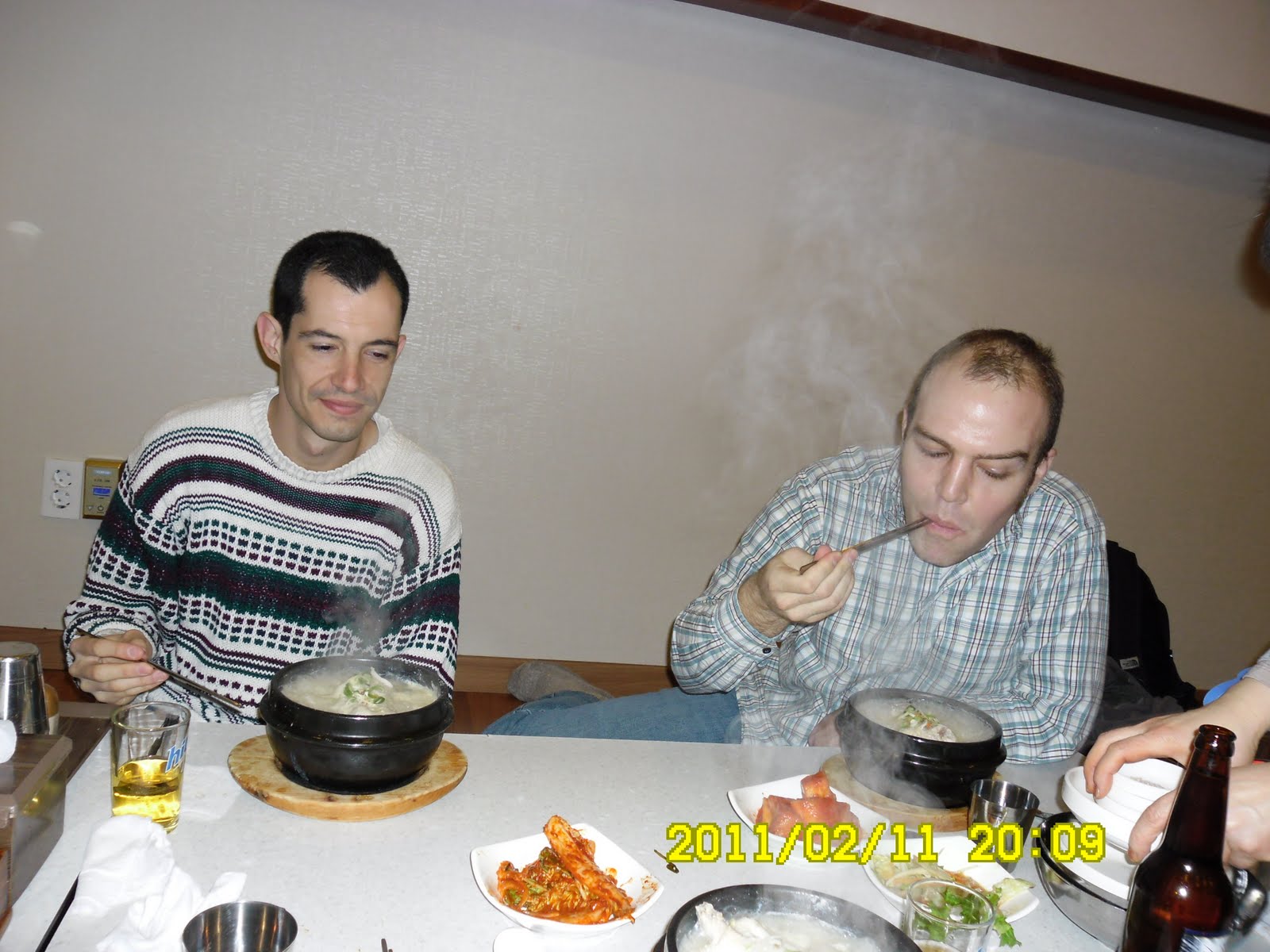 [At a Samgetang Restaurant, 参鶏湯(サムゲタン)レストランにて、삼계탕 식당에서]
 クリスは2年前にソウルの公立中学校の英語補助教師として初めて韓国にやってきて、短期間に韓国語をマスターした珍しい青年。私とは昨年、釜関フェリーの中で偶然に会った。その時、船の中ではずっと韓国語で会話をした。
バスはほぼ満車。クリスと共に前方の席に座った。クリスは英字新聞のハングルの解説を使って韓国語の勉強をした。彼のケータイは辞書になり、使いこなしていた。
慶州は前夜、大量の雪が降ったようで、当初予定していた登山口へのアクセスはバスがチェーンを用意していなかったため規制された。やむを得ず仏国寺の駐車場へ向かい、こちらから同じ道を往復するルートにした。
仏国寺駐車場から山門までの道ですら大量の雪のため、けっこう大変で、そこから石窟庵の駐車場までは登山路をとったため、さらに大変で、私は先頭とは大きく離れてしまった。
 [On the way to Iljumun Gate, 一柱門への途上にて、일주문에 가는 도중에서]
 一柱門に到着する前に亭子のある場所でチンハンサラムが例のごとくソウルの長寿マッコリを振る舞っていて、わたしも温めた「法酒」と鱈の干物とパングルトマトを提供した。
 [In front of the gate to Seokram, 石窟庵の門の前で、석굴암 문 앞에서]
 石窟庵駐車場から吐含山山頂までの登山路もさほど急なわけではないが、とにかく雪の量が多い。今回、アイゼンだけでなく、スパッツを持参したのは正解だった。スパッツがなければ、祖母山の二の舞を踏むところだった。
 [AhToSan members in the deep snow, 深い雪の中のメンバー、깊은 눈속의 멤버들]
仏国寺から私の前を歩いていたアジュンマが、アイゼンもスパッツもなく、手袋さえないまま、一人で吐含山の頂上まで登ったことに驚いた。
 [On the ridge near the peak, 山頂付近にて、정상 부근에서]
頂上の立派な石標のある広場では始山祭は行わず、すこし外れた、やや狭い空間で行った。私が到着した時はすでにセルモニーの準備をしていた。
 [Preparation for the ceremony, 始山祭の準備、시산제의 준비]
 セルモニーは例年通りでたんたんと進んだが、今回もクリスが終山祭に続いてチョルを、それも2回も行ってみんなの人気者となった。
 [They put money offering on the altar, 先ずお金を捧げる、우선 돈을 바친다.]
始山式の後、トックやスユク、ナムルがふんだんに振る舞われ、弁当は不要だった。
下山する前に石標の前で皆で集合写真を撮ったのだが、私は遅れて迷惑をかけることを恐れ、その前に下山を開始した。
 [A group picture at Mt. ToHamSan, 吐含山山頂で集合写真、토함산 정상에서 단체사진]
 [On the way back to the bus, 下山途中にて、하산 도중에서]
10:45に登山を開始し、15:25にバスに戻ったから5時間弱の登山だった。ティップリは適当な場所を探し、よい広場を見つけて行った。
 [Scenes of Tippuri, ティップリ風景、뒤풀이 모습]
トック(떡국)はキムチと一緒に食べるとうまい。クリスもよく食べ、焼酎もよく飲んだ。また、幼子に心にもどった会員たちがトックの煮える間に、雪だるまを2つ作った。
 [With a snowman,雪だるまと、눈사람과 함께]
クリスはマイクロソフトに就職した妹が韓国に遊びにくるので帰路を急ぐと言い、クリス同様、ソウルからきたチンハンサラムと共に慶州からコレイルでソウルへ戻ることにしたが、コレイルは前日からKTXが故障していたので、はたして早く帰ることができたか不明。
大田には8時ごろ戻った。これはアトサンの今年になって2回目の登山で、トータルでは227回目。また、日本での登山も含めると今年の11回目の登山だ。


 [One crocodile puts his arm (forepaw) on the shoulder of his friend, 肩組みしているワニ、어깨동무 하고 있는 악어들]


