About pictures/当ブログ内の写真について/당 블로그내의 사진에 대해서

Most of the pictures in this blog are taken by my camera, yet some of them were downloaded from the website of the hiking club. If you click any pictures, they become the original size.

当ブログ内の写真の大部分は筆者のカメラで撮影したものですが、一部、山岳会の共有写真からダウンロードしたものを含みます。すべて、各写真をクリックすれば、元のサイズに拡大します。

당 블로그내 사진의 대부분은 필자의 카메라로 촬영한 것입니다만 일부 산악회 공유 사진으로부터 다운한 것도 포함합니다. 모두 각 사진을 클릭하면, 원래 사이즈에 확대합니다.

2010年4月20日火曜日

DR #181 "Flower-viewing Party" and "White dandelions" in Korea

DR #180 “Flower-Viewing Party” and "White dandelions" in Korea

Spring in Daejeon has come with the flower of forsythia (or the golden bell-tree). We (AhToSan hikers) kept going to south of the peninsula for seeking “flowers” in the mountain.

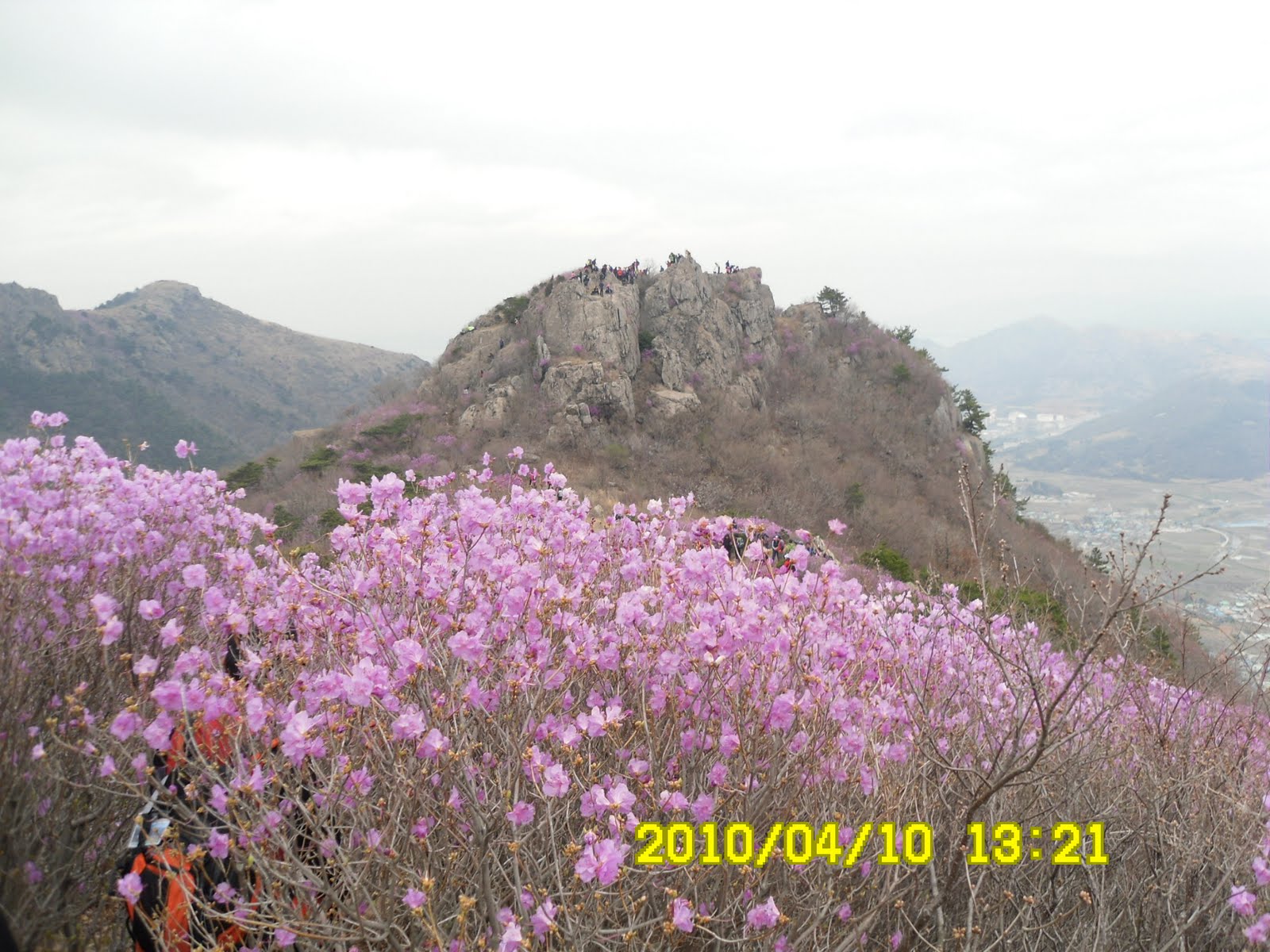
I saw “Jindalle” or Korean azalea in Jindo (See my blog of March 6) for the first time this year. Then Jindalle has come toward north, little by little, and its peak was at YongChuiSan on April 10 (See my blog of April 10.) The whole mountain was covered with Jindalle.

This reminded me of a Japanese mountain song named “Bougatsuru Sanka.”

You can listen to this song by Youtube as below:

http://www.youtube.com/watch?v=TIQdbRdjztw

Its English version goes as below:
Banks of wild Azaleas are now in full bloom and at their best, Dying Taisen Mountain a deep, purplish red. And you, mountain-climbing men, look up at the mountain top, And you will surely feel that life is sweet as a mountain-flowers' heart.

Souce:http://jiten.cside3.jp/Bogatsuru%20Sanka.html

Now the cherry blossoms are in full bloom in Daejeon.


[Cherry blossoms along River Tandong, 炭洞川沿いの桜、탄동천가의 벚꽃]

There are several places famous for cherry blossoms in Korea.

One is Jinhae, GyeongSangNamDo. The navy base there is widely known as its cherry blossom festival in the 1st week of April.
Another is Yeouido, Seoul. It also holds Cherry Blossom Festival, this year from April 15 to April 19.

One big difference between Japanese “Ohanami” and Korean “cherry blossom viewing” is people’s behavior under the cherry blossoms.

Japanese people have “party” while Korean people just enjoy seeing the beauty of flowers.

There are several places in Daejeon for seeing cherry blossoms. But I never saw people having party under the cherry blossoms. They even do not “light-up” cherry blossoms during the night.

It seems that Japanese people love cherry blossoms so much that they take much longer time under cherry blossoms while drinking and eating even in the evening.

I used to enjoy “Ohanami” with KEC people at Genjiyama Park in Kamakura during the first week of April. I sometime miss such a time of entertainment.


[Magnolia, モクレンの花、목련의 꽃]

Korea people also enjoy cherry blossoms, but they can enjoy other flowers such as “Jindalle,” forsythia, magnolia, violet, dandelions, and “Ssariko” in Korean. “Ssariko” is very white, just like snow from distance.


[Violets, スミレの花、제비꽃]

Talking about “white” I found white dandelions on my way to the college. Since I had never seen white dandelions, it looked strange, and I enjoy seeing “white” dandelions.


[White dandelions, 白いタンポポ、흰 민들레]

DR#181 「韓国のお花見と白いタンポポ」

テジョンの春はレンギョウで始まる。アトサンでは3月中、花を求めて韓半島の南端を訪ね、珍島で今年初のチンダルレを見たが、チンダルレのピークは4/10の霊鷲山だった。

日本の山男の歌で「坊がつる賛歌」という歌がある。芹洋子さんの歌で、動画で聞ける。私の大好きな歌なので紹介したい。
http://www.youtube.com/watch?v=TIQdbRdjztw
この歌の2番の歌詞にでてくる「ミヤマキリシマ」がチンダルレに似ている。

ウィキペディア:
http://ja.wikipedia.org/wiki/%E3%83%9F%E3%83%A4%E3%83%9E%E3%82%AD%E3%83%AA%E3%82%B7%E3%83%9E
(画像検索もオススメです。)

そして、ここテジョンでもいよいよ桜が満開となった。


[Cherry blossoms in front of Currency Musium, 貨幣博物館前の桜、화폐박물관앞의 벚꽃]

韓国で桜の名所と言うと慶尚南道、鎮海(チネ)市の海軍軍港とソウルのマンハッタン・汝矣島(ヨイド)である。

鎮海軍港祭りガイド:
http://www.konest.com/data/spot_mise_detail.html?no=2053
汝矣島の桜まつり:
http://www.konest.com/data/spot_event_detail.html?no=942

前者は日本の関東地方とほぼ同じ時期(4月第1週)に開花、後者は2~3週間遅れてちょうど今の時期が満開。

私も日本にいた時は毎年4月の第1週はKECの仲間と鎌倉の源氏山でお花見をしたのを思い出す。

ここ、テジョンも素晴らしい桜の花を満喫できるが、日本と大きな違いがある。それは花見の仕方である。

日本の花見は桜の花の下で宴会を楽しむが、韓国ではそのような宴会は見たことがない。

桜も他の花と同様、その美しさを見て楽しむだけ。また他の地域は知らないが、少なくともテジョンではライトアップの夜桜はない。

これは韓国人は日本人ほど桜に思い入れをしないためだと思う。


[Magnolia, モクレンの花、목련의 꽃]

ここテジョンでは、桜のほかに、モクレン、スミレ、タンポポ、それに韓国語で「サリコ(싸리꽃)」と呼ばれる白い雪のような花がさいている。


["Spiraea thunbergii" or "baby's breath spirea," 日本原産の「ユキヤナギ」、일본 원산 「유키야나기」]

白いと言えば、私の通勤路には白いタンポポが咲いているのも不思議で、たのしい発見である。


[White "violet"? 白いスミレ?흰 제비꽃?]


[White dandelions, 白いタンポポ、흰 민들레]

2010年4月18日日曜日

100417 Udusan (牛頭山 우두산 1046m), GeoChag (居昌)、GyeongNam(慶南)

Saturday, April 17, 2010.

AhToSan regular hike #263(My 197th with AhToSan): Name of the mountain is Udusan (Bull Head Mountain). There are 9 peaks in this mountain. The main peaks are UiSanBong and SangBong which are twin peaks. They say it looks like bull head, that’s how the name came.


“UiSan” comes from the famous monk named UiSanDaesa(AD625-702) during Silla period (BC57 to AD935) because UiSanDaesa meditated on this peak.


["UiSanBong、義湘峰、의상봉]

It is not very far from Daejeon. The bus left at 7 a.m. and arrived at the foot of the mountain at 9:30.


The course was from GeoGyonSa temple – JangGunBong – UiSanbong –SangBong – MaJangJae – GeoGyonSa: 14 km, 6.5 hour hike.


This time I had a young companion from Japan. M came to Daejeon last month and began working with B at the same research institute.


[Young researchers of Japan and Russia, 日露の若い研究者たち、일러의 젊은 연구자들]

This time, another foreigner, D from Russia also joined us. Actually, D has been a good hiker, and he already joined AhToSan hike more than 10 times. D and M are also colleagues, and they are same age (27), youngest among AhToSan members.


It was M’s first hike in Korea, but he used to hike in Japan, so he did good job as the first hike in Korea.

This course was a bit tough because we did a lot of rock climbing, up and down from the beginning to the end. Hiking distance was also long. So, it must be hard for M, but he did good job.


The weather was super fine. Although I saw a little bit some snow, and ice in the mountain, it was warm enough to wear only a short sleeved shirt.


[A little bit snow remained, 少し残雪があった、조금 잔설이 있었다]

The number of participants was only 22, half of the last time. But most of them were familiar to me, so I could enjoy the hike and the whole trip, esp. with my new pal, M. Though he speaks good English, we talked in Japanese from time to time.

The “tippuri” was fried eggs with chestnut “Makkori.” I enjoyed both fried eggs and chestnut “Makkori.”


[Tippuri was fried eggs and chestnut "Makkori", ティップリは卵焼きとクリマッコリ、뒷풀이는 달걀부침과 밤 막걸리]

PS: The destination was recently changed from Maisan (Horse Ear Mountain) to Bull Head Mountain. (Maisan is famous for its cherry blossoms.) This is because Maisan area was prohibited for hikers in order to prevent “bush fire.” In my opinion, the precipitation of Korean peninsula is much less than Kanto area in Japan. So, most of Korean mountains are in danger of bush fire. Actually, I witnessed the certain area along the route of this hike was burned because of bush fire. All pine trees in the area were burned and the trees were all dead. I guess fire-fighters did good job to stop the fire in the limited area.


[Burned pine trees, 山火事のため黒こげになった松林、산불 때문에 흑 눌음이 된 송림]

2010年4月17(土)快晴 

アトサン定期登山263回(私は197回目)の登山は慶南・居昌(コチャン)の牛頭山(ウドゥサン우두산)で9つの峰からなり、そのうち最も有名な峰は義湘峰(ウィサンボン의상봉:1045m)である。牛頭山という名前は、主峰の義湘峰と上峰(別名「別有山」が双子の峰になっていて牛の頭のようなためだと言う。


[The mark says "Bull Head Mountain" 牛頭山の石標、우두산의 돌표]

また、義湘峰の名前は新羅時代(BC57~AD935)高僧である義湘大師(625~702)がここで修業をしたところからその名があるという。

大田からは比較的近距離で、バスで2時間半ほどで到着。9時40分には登山を開始した。

今回のコースは古見寺~将軍峰~義湘峰~上峰(別有山)~マジャンジェ(마장재)~古見寺というループコースで、約14キロで6時間半のハイキングだった。

今回は久しぶりに私以外の日本人、Mが参加。また外国人としてはロシア人のDも参加した。

MもDも、メキシコの友人Bと同じ職場で韓国天文研究院の同僚だ。また、年齢は二人とも27歳で、アトサン参加者の中で一番若い。この若さで海外に雄飛して活躍する将来有望な若者たちである。

Dは昨年から何度もアトサンに参加しており、通算では10回以上になる。Mは先月韓国へ来たばかりで今回が初めての登山だ。

しかし日本でかなり登山したらしく山歩きには慣れているようだ。今回のコースは岩場が続き、登りも下りも急な場所も多く、アトサンのハイキングの中でも難易度が最も高いうちに入る。

しかし、天候にも恵まれ、また楽しい仲間にも恵まれ、最高のハイキングになった。

参加人数は22人と前回の半分に過ぎないが、かえってまとまりが良く、昼食も一緒に食べた。


[Lunch time, 昼食の時間、점심 시간]

ティップリは女性会員が卵焼きを次々と焼いて、クリを原料としたマッコリのつまみにした。このマッコリはティップリ担当の会員がわざわざ大田の隣の市である公州まで行って仕入れたものだ。


[Tippuri was fried eggs and chestnut "Makkori", ティップリは卵焼きとクリマッコリ、뒷풀이는 달걀부침과 밤 막걸리]


[Cooking fried eggs, 卵焼き料理中、달걀부침 요리중]

また、久しぶりに日本語で話すこともでき、満足だった。

PS: 今回の登山地は、元来、全北・鎮安の桜で有名な「馬耳山(マイサン)」の予定だったものが、干ばつによる山火事防止のため登山禁止区域に指定されため、急遽変更されて決まったものだ。韓国はすくなくとも関東地方にくらべ、降雨量が少ないようで山火事の恐れは常にあるようだ。今回の登山ルートでも1カ所山腹から尾根まで松の林がすっかり丸焦げになっているところを目撃した。

2010年4月12日月曜日

100410 YongChuiSan (霊鷲山영취산439m), Yeosu(麗水)、JeonNam(全南)

April 10, 2010 (Sat) Cloudy.

AhToSan 262nd hike (It was my 196th hike with AhToSan): YongChuiSan (439m), Yeosu, JeonNam province. “YongChui” means “sprit of eagle.” This name is popular in Korea. There are at least 5 “YongChuiSan” in Korea and this mountain is the lowest among them. Yet because of “jindalle community,” it is a very famous mountain for hikers.

Actually, all seats (45) were reserved and there was no vacancy in the bus. B (Mexican friend) and I took back seats of the bus and we started at 6 a.m. at the Expo South Gate Parking Lot.


This is my 3rd time to climb this mountain. Last time we climbed from the other side of the mountain (industrial area). This time we climbed from SanAm Elementary School side.

We passed through a peaceful village where I noticed a cow plowing the rice field. There are many cherry trees and their blossoms were in full bloom.


[A cow plowing in the field, 牛が田を耕していた。소가 논을 갈고 있었다.]

After about one hour hike, we reached at “jindalle” festival area from where you could see jindalle community very well.


[Looking down the jindalle festival area,チンダルレ祭り会場を見下ろす、진달래 축제 회장을 내려다본다]

First we climbed JinRyeSan (510m) which is the highest peak of this hike. Then we came back to the festival area.

We (6 of us) walked toward Siru Bong and took a good place for lunch on the flat area. While having lunch, a helicopter was hovering around the up of our heads. Someone in the chop was waving his hands toward us, and many hikers were waving back their hands.


[The whole mountain covered with chindalle, 山を覆うチンダルレの群落、산을 덮는 진달래 군락]

After lunch we walked in the middle of jindalle community, and walked toward YongChuiSan via Siru Bong. Siru is a traditional kitchen utensil for cooking rice when they make rice-cake. So the mountain looks like “Siru.”

There is a wooden mark for the peak of YongChuiSan for the use of emergency call. It was relatively easy hike to go down over a small hill from there along the small river.

[Wooden mark as the peak of YongChuiSan、霊鷲山山頂の木標、영취산 정상 나무표]

We reached at a beautiful temple named “HeungGukSa” which was built during Goryeo dynasty (918-1392).


["Dragon head" attached to the roof of a temple building,寺の屋根に付いていた龍の彫り物、흘국사 건물의 지붕에 붙고 있었던 용 머리]

There were many cherry trees and they were all in full bloom.

People here in Korea, just enjoy seeing the blossoms, just like they enjoy seeing other beautiful flowers, and not put sheet under the blossoms and enjoy eating and drinking like Japanese people.

There were many automobiles especially buses. Too many for the parking lot. So they parked along the street. Our bus was one of them.

Local people held "open-air" market along the street, and were selling vegetables. One thing I found interesting was “dandelions.” A lady was selling dandelions, saying “it’s a good medicine for liver.”


[A lady selling dandelions, タンポポを売る婦人、민들레를 파는 아주머니]

Later, I found what she said was true in Wikipedia as below:
タンポポ:http://ja.wikipedia.org/wiki/%E3%82%BF%E3%83%B3%E3%83%9D%E3%83%9D
Dandelions:http://en.wikipedia.org/wiki/Taraxacum#Medicinal_uses
민들레: http://ko.wikipedia.org/wiki/%EB%AF%BC%EB%93%A4%EB%A0%88%EC%86%8D

We had “Tippuri” party beside the bus as usual. The main dish was called “Suyuk” which is boiled pork with vegetable.


[Main dish was "suyuk" or boiled pork, メインディッシュはスユク(茹でた豚肉)、메인 디쉬는 수육]

I enjoyed the tippuri as usual, but the trouble came after the party. When we all aboard on the bus, a man sitting behind of us, began accusing me of “Dokdo” and “Historical issues” which I hate to discuss with Korean people.

I do not like to discuss the political issues with AhToSan members, or any Korean people, and that’s what I told him. He kept noisy accusation several times, then even told me “we will appeal that Daemado is ours.” Daemado means Tushima in Korean language. I told him, “Go ahead, and say your appeal to all of the world.”

On the way back we stopped at Fish Market of Yeosu. Fish market is always fun to see. B and I enjoyed seeing a lot of different kind of fish. Most intriguing sea animal was “sea hare.” I never thought of “sea hare” as “food.”


[Sea hares for sale, 売り物の「アメフラシ」상품인 「군소」]

Sea hares: http://en.wikipedia.org/wiki/Aplysiomorpha
アメフラシ:http://ja.wikipedia.org/wiki/%E3%82%A2%E3%83%A1%E3%83%95%E3%83%A9%E3%82%B7


[They are drying fish, 魚の干物作成中、물고기의 마른 포 작성중]

The bus was supposed to leave the market at 4:50. But two people did not return to the bus even after 5 p.m. It was the man who attached me orally and the one who stopped him on the bus. They were drinking more alcohol at the market.

The bus left the market at 5:05 and arrived at Expo South Gate Bus Stop at 9 p.m.

2010年4月10日(土)

アトサン定期登山262回(私は196回目)の登山は全南・麗水(ヨス)の霊鷲山(ヨンチュィサン영취산:439m)でチンダルレの名山として知られている。「霊鷲山」という名の山は全国に少なくとも5つあり、その中でも最も低い山だが、チンダルレと言えば、麗水の霊鷲山である。今回は参加者が45人でバスは満員。私はメキシコ人の友人Bとともに後部座席に座り、エキスポ南門を6時に出発した。

私はこの山は3回目で、前回は2年前の2008年4月5日に登山している。前回は、今回とは山の反対側になる「予備軍訓練場(예비군훈련장)」から登ったが、今回はサンアム小学校(산암초교)側から登った。


[Industrial area on the other side,山の反対側は工業地帯、산의 반대측은 공업지대]

近頃めずらしく耕運機ではなく牛が田んぼを耕しているジンプクマウル(진북마을)を過ぎて林道を横切って登りきった広場がチンルダレ祭り会場。


[A helicopter was flying, 麗水市のヘリコプター여수시(麗水市)의 헬리콥터]

そこから左手にそびえるジンレ山(진례산510m)に登って展望を楽しんだ後、祭り会場へ戻り、シル峰方面へ少し登ったひらけた場所で、6人の小グループで昼食をとった。この時、麗水市と書かれたヘリコプター1機が近くを旋回し、乗務員が我々に手を振った。


[The whole mountain covered with chindalle, 山を覆うチンダルレの群落、산을 덮는 진달래 군락]

昼食後、チンダルレの群落の中を歩いて蒸籠(せいろう)のような形をしたシル峰(「シル」とは韓国語で「蒸篭」)を経て霊鷲山山頂に至った。霊鷲山山頂の石標はなく、真新しい緊急呼び出しのための木標に「霊鷲山山頂」と書かれていた。


[Wooden mark as the peak of YongChuiSan、霊鷲山山頂の木標、영취산 정상 나무표]

ここからは小高い丘ひとつを越えて渓谷沿いに下ると以前も訪れた「興国寺」を通って駐車場へ出る。この寺は高麗時代(918~1392)に建てられた古刹で、国宝・宝物が多いというが、境内に植えられた桜が満開でとても美しかった。


[Mountain Gate of Heongkuksa Temple,興国寺(フングクサ)の山門、흥국사 정문]

また人工の洞窟のような施設があり、龍の口から飲料水が出ているが、この内部の仏教画が見事だった。興国寺の駐車場は車があまりに多かったせいか、たくさんの車が路上駐車しており、我々のバスもそのなかの1台だった。

道端では高菜のような野菜とそれをキムチとして漬けた食べ物などが売られていた。これは特産物らしく、多くの会員が買っていた。野草も多く売っていて、私はぜんまいと芹を買った。

さて、ティップリは、路上駐車したバスと小川の間のせまい空間に椅子を並べて進行中だった。メインディッシュは、ゆでた豚肉を野菜に包んで食べる「スユク(수육)」で、おいしかった。


[Main dish was "suyuk" or boiled pork, メインディッシュはスユク(茹でた豚肉)、메인 디쉬는 수육]

しかし、初めて来た新人の一人、Cが焼酎を飲み過ぎたせいか、車内で私に「独島」だの「歴史認識」だのと言い出して絡んできたのには参った。

はじめは「政治的な話はしたくない」と取り合わなかったが、「それなら対馬は韓国領だと主張するぞ」というので、「どうぞご自由に、世界中にそう主張なさってください」と答えた。この酔っ払いの隣に座ったAさんがなだめて、この場はおさまった。

バスは麗水市内を抜ける前に海産物市場に止まり、30分ほどショッピングの時間を持った。海産物市場を見物するのはおもしろい。なかでもアメフラシを売っていたのには驚いた。これも湯がいて食べれるらしい。私は中型の鯛の干し物を買った。1万ウォンで11匹もきた。


[The entrance of the "new sightseeing type" fish market, 観光型新海産市場、관광형 새 해산물시장]

バスは4時50分に出発する予定だったが、5時を過ぎても戻らない会員がいる。私にからんできたCとそれをなだめたAさんが市場でも酒を飲み始めたらしく、彼らが戻ってこなかった。Cの奥さんらしい人が携帯で早く戻るよう叱って、バスは15分遅れで出発した。

バスは夕方のラッシュ時の渋滞に巻き込まれ、高速に乗るのに時間がかかり、結局大田のエキスポ南門に到着したのは午後9時だった。

DR#180 “Movies in Korea” 「韓国映画事情」

DR#180 “Movies in Korea”

Next to hiking, what I enjoy in Korea is seeing movies in the theater. Recently I enjoy “foreign” movies since last December. I really enjoyed “Avatar” very much. I saw this movie 3 times in three weeks.

In Korea, the fee of the first movie in every screen is half of regular fee. Since I have no class on Friday, I usually go to see the movies on Friday.

The multiplex movie theater is in the building named “Star-gate” which is about 30 minutes by bicycle from my apartment.

The multiplex theater was called “Premus” and the first movie of every screen cost only 4000 won. Moreover, if I showed my LG card, they discount 1000 won off, which means I could see the first run movie with only 3000 won(about 280 yen!)

But “Premus” seemed to be bought off by “CGV” last year, and they raised the “morning” movie fee to 5000 won. And they did not discount with LG card anymore.

Comparing with movies in Japan, it is still reasonable cost (5000 won means 450 yen) so I often go to the theater.

This year, they run “3D” movies like “Avatar” one after another. I saw “Alice in the wonder land” and “Clash of the Titan.” They are all fantasy fictions. (3D movie costs 8000 won, however.)

Today, I saw “Green Zone” which looked like real documentary movie based on “2003 invasion of Iraq.” According to Japanese Wikipedia, this is a “thriller” movie.
http://ja.wikipedia.org/wiki/%E3%82%B0%E3%83%AA%E3%83%BC%E3%83%B3%E3%83%BB%E3%82%BE%E3%83%BC%E3%83%B3

But English version did not say “thriller” movie at all, and I don’t think this is a “thriller” movie, rather it is a documentary movie.
http://en.wikipedia.org/wiki/Green_Zone_(film)

It will be released in Japan on May 14, 2010.

DR#180「韓国映画事情」

韓国の生活で登山の次にうれしいのは映画だ。なにせ安くて早い。最近は外国映画を続けて観ている。昨年12月に封切された「アバター」は特に気に入って3回も観た。

韓国では午前中に上映される1回目の映画の料金は半額だ。私がいつも観に行くのは、家から自転車で30分ほど離れた斗山にあるスターゲイトビル内のマルチプレックスだ。

昨年まで、プリマスという映画館のチェーンが経営していて、早朝割引は4000ウォン。それにLGカードを示すとさらに1000ウォン割引されて3000ウォンで封切映画が観られた。

しかし、昨年、経営者がプリマスからCGVに変わり、早朝割引料金が5000ウォンになった。さらに痛いことにLGカードが使えなくなった。

それでも5000ウォンといえば日本円で450円程度なので安い。

ただし「アバター」は3D映画なので8000ウォンだ。「アバター」のあと、「不思議の国のアリス」とギリシャ神話を素材にした「タイタンの戦い」と立て続けに3D映画を観た。ただ、「アバター」の時のような衝撃はなかった。

今日はイラク戦争を素材にした「グリーン・ゾーン」を観た。3本続けてファンタジー映画を観た後の本格的なハードボイルドというかドキュメンタリー映画のような、米国の陰謀を暴いた映画に衝撃を受けた。

この映画のすごいところは、現実のイラクでは大量破壊兵器がなかったにも関わらず、戦争がはじまり、そして続いていることだ。

ちなみに「グリーン・ゾーン」はネットで予告編が観られるが、日本での公開は5月14日である。

予告編 http://green-zone.jp/

2010年4月5日月曜日

100403 GamAmSan (甘闇山:828m), Hapchon(陜川), GyongNam(慶南)

April 3, 2010(Sat) AhToSan No. 261st Hike to GamAmSan (828m) in Hapchon, GyongNam Province. (My 195th hike with AhToSan, and 16th hike in 2010.)

It was a super fine day. The chartered bus left Expo-South Gate at 7 a.m. and arrived at Daegi village at 10 a.m.


[About 40 people joined the hike, 約40人が参加した。 약 40명이 참가했다.]

Among 40 perticipants, there were only 2 foreigners, B (Mexican) and I. B bought a new camera, so he was eager to hike.


[At the first rocky slop, 最初の岩場、최초의 암석 지대]

GamAmSan locates just next to HwangMeSan National Park. It was really a rocky mountains, but there were not many hikers that day. One reason is it is not as famous as HwangMeSan. Yet it was challenging, and fun to climb rocks upon rocks.


[Members on the rock, 岩の上に立つ会員たち、바위 위에 서는 회원들]

The whole group became 3 small groups according to hiking pace. Top group, 2nd group, and 3rd group. B walked with Top group, but I walked with the 2nd group.


[The Hawk Rock, メパウィ(鷹岩) 매바위]

We did not see each other until the end of the hike. 5 and half hours later.
Top group made the peak of GamAmSan by noon, but the rest of us couldn’t. We had lunch on the big rock before GamAmSan.


[Lunch on the big rock、岩の上で昼食、바위 위에서 점심]

Afternoon hike was also challenging, but ridge hike was relatively easy because it was well facilitated with wires, ropes, and even steel steps.


[The steel steps, 鉄の階段、철계단]

The final peak was called BuAmSan (695m) then we descended to the village called “Igyo Maul.”


[The final peak, BuAmSan, 最後の峰・傅岩山、마지막 봉우리인 부암산]

The time difference of each group was about 30 minutes, each.

As for the tippuri party, they served spicy soup with big bones of pig. It was very spicy yet delicious. Both B and I enjoyed it with the rest of AhToSan hikers.


[After-the-hike party, ティップリは豚の骨汁、뒷풀이는 감자탕]

2010年4月3日(土)アトサン定期登山261回(私は195回目)の登山は慶南・陜川の甘闇山(カムアムサン감암산:828m)で久しぶりに快晴。また、大田からも近いため、南門7時に出発。明るくなってからの出発は、明るいうちの帰着とともの今年初めてのことだ。

今回の外国人の参加者はメキシコ人のBと私だけ。Bは先週、富士のデジカメを購入して張り切っている。


[B was eager to take pictures with his new camera,Bは新しいデジカメで熱心に写真撮影、B은 새로운 디카로 열심히 사진촬영]

バスはテギ・マウルへ10時に到着。甘闇山をバックに記念撮影をしてから登山開始。渓流に沿って登ってから木製の橋を渡るとすぐ岩場。ここで40人近いグループは、先頭、中間、後尾の3グループに分かれた。Bは先頭グループ、私は中間。

最初の目標はメパウィ(매바위)で、鷹岩という意味だが、その姿に由来するのだろう。メパウィはかなりの難所で、特に登ってから、下るのが難しかった。


メパウィを過ぎても岩場が続き、今回は特に天気もとびきり良かったため、写真撮影に時間がかかった。中間組は、2時間ほど登った展望のよい場所で昼食。

先頭組はすでに甘闇山頂上に到達していた。また後尾は約30分遅れて中間に追いついた。昼食は少なくとも3カ所でラーメンを煮て、弁当と共に食べた。


[The top of GamAmSan, 甘闇山(カムアムサン山頂、감암산 정상]

昼食後、中間組がまず、出発。30分ほどで、甘闇山頂上に到着した。ここから次の目的地の傅岩山(プアムサン부암산:695m)までも岩場が多く、場所によってはワイヤーやロープ、また鉄製の階段などが設置されている。


[Steel steps, 鉄製の階段、철계단]

山自体の奇岩も素晴らしかったが、天気が良かったため、周囲の山々もよく見えてすばらしかった。特に目立った山は伽耶山だった。


[Jindalle flowers at the skirt of the mountain, 麓に咲いていたチンダルレの花、기슭에 피어 있었던 진달래 꽃]

花はサンスユやセンガンナムの黄色の花のほか、麓ではチンダルレや梅の花がきれいだった。特に村の近くの梅林は白い梅の花が満開だった。


[Ume blossoms were in full bloom,梅の花は満開、매화꽃은 만발]

約5時間から5時間半のハイキングの最終ゴールはイキョマウル(이교마을)という村の駐車場で、山岳会のバスはアトサンのみ。

ティップリは大きな豚の骨の入ったカムジャタンのようなスープで、これは辛いものに目がないBがいたく気に入って、お代わりを連発、私も彼に負けずにお代わりをした。